
Many Decision Makers Still Think More Calls Mean More Revenue
Many businesses still believe that increasing sales calls is the fastest way to grow revenue. In reality, meaningful conversations, customer understanding, and qualified opportunities create far better results. Learn why modern sales teams are shifting from measuring activity to measuring impact—and how smarter prospecting leads to sustainable business growth.
 اويفا
اويفا 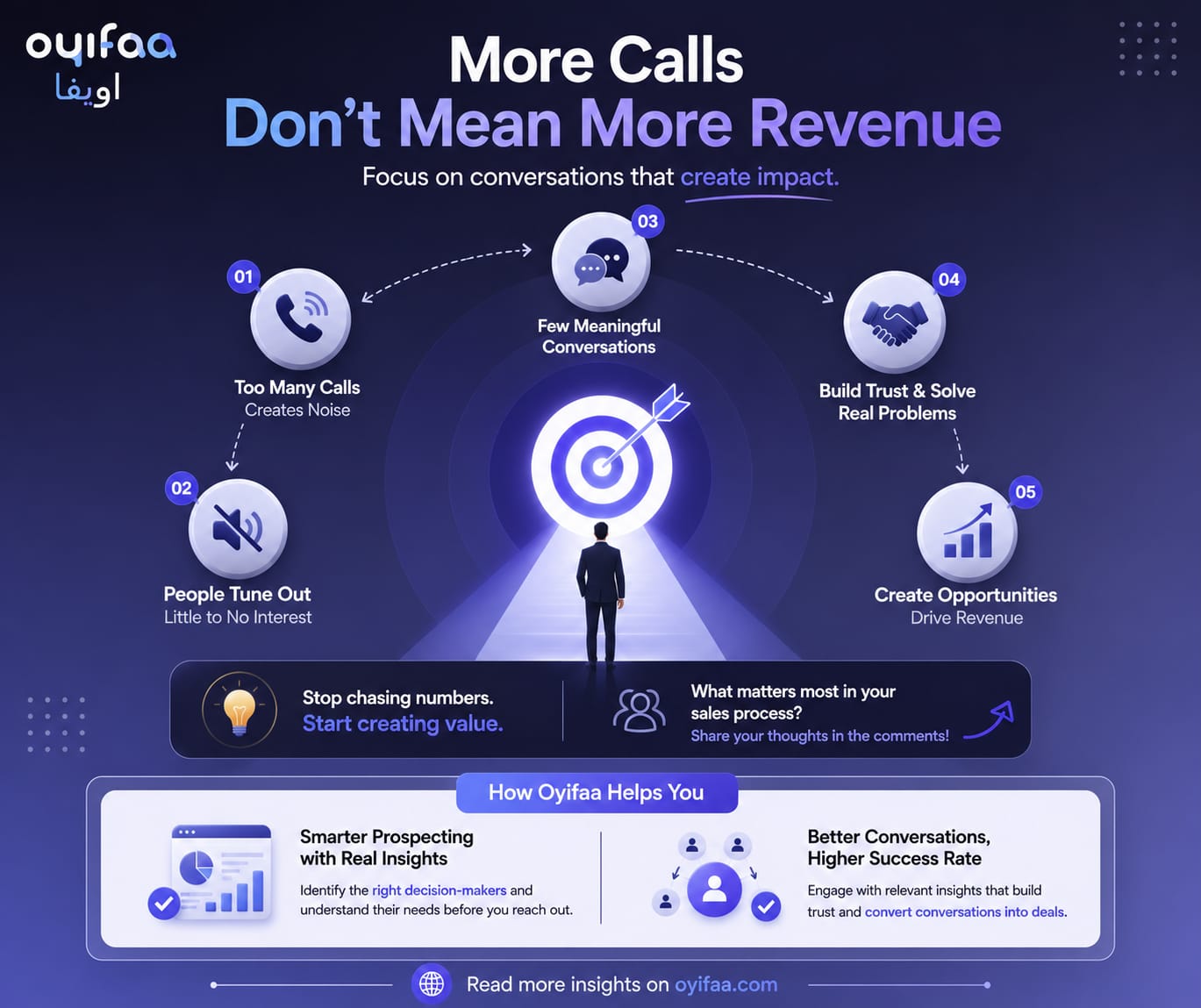
Many Decision Makers Still Think More Calls Mean More Revenue. But Is That Really True? 📞💰
Picture this. It's Monday morning, and the sales meeting begins with the same question it always does:
"How many calls did everyone make last week?"
The team shares impressive numbers. Some made 150 calls, others crossed 250. The spreadsheet looks full, the activity chart is green, and everyone appears busy.
Then someone asks the question that matters most:
"How many deals did we actually move forward?"
Suddenly, the room goes quiet.
This is where many businesses get stuck. They celebrate activity, but they're disappointed by the results. The belief that more calls automatically create more revenue has been around for years, yet today's B2B buyers have changed. The way people make purchasing decisions has evolved, but many sales strategies haven't.
The Problem Isn't a Lack of Effort—It's a Lack of Relevance 🎯
Sales teams today work incredibly hard. They spend hours making calls, sending emails, and following up with prospects. The effort is real.
However, effort alone doesn't guarantee outcomes.
Modern buyers receive dozens of sales messages every week. They ignore generic pitches because they don't have time for conversations that don't add value. They respond to businesses that understand their industry, recognize their challenges, and offer meaningful solutions.
That's why simply increasing the number of calls rarely improves revenue. If the conversation isn't relevant, another call won't change the outcome.
Why More Calls Don't Always Mean More Business 🤔
Imagine two different approaches.
Team A believes success comes from volume. Every salesperson is expected to make hundreds of cold calls every week. Performance is measured by activity reports, and success is defined by how busy everyone looks.
Team B takes a different approach. Before reaching out, they research the prospect's business, understand their industry, and identify possible challenges. They make fewer calls, but every conversation has a clear purpose.
At the end of the month, Team A has impressive activity numbers but very few qualified opportunities.
Team B has fewer calls on paper, yet more meetings, stronger relationships, and a healthier sales pipeline.
The difference isn't effort.
The difference is relevance.
Today's Buyers Want Conversations, Not Interruptions 💬
Think about your own experience.
Have you ever answered a cold call that immediately turned into a product pitch?
Most people lose interest within seconds.
Now imagine receiving a call from someone who understands your business, mentions a challenge you're currently facing, and offers useful insights instead of a sales script.
Which conversation would you continue?
Customers don't buy because someone called them.
They buy because someone earned their trust.
Trust is built through listening, understanding, and offering value—not by increasing call volume.
The Metrics That Actually Matter 📊
Many organizations still focus on numbers that look impressive in reports but don't necessarily contribute to business growth.
Instead of asking,
"How many calls did we make?"
Try asking questions that reveal real progress.
- ✅ How many meaningful conversations did we have?
- ✅ How many decision-makers engaged with us?
- ✅ How many qualified opportunities entered the pipeline?
- ✅ How many customer problems did we truly understand?
- ✅ How many conversations moved to the next stage?
- ✅ How much revenue did those conversations eventually generate?
These metrics tell a much clearer story because they focus on outcomes rather than activity.
Busy Doesn't Always Mean Productive ⚠️
Being busy feels good because it creates the impression that progress is happening.
But sales isn't about staying busy.
It's about creating impact.
A salesperson can spend an entire day making hundreds of calls without generating a single opportunity.
Another salesperson may spend that same day preparing for five important conversations that lead to long-term partnerships.
Who created more value?
The answer isn't found in the number of calls.
It's found in the quality of the relationships they built.
The Real Shift Every Decision Maker Should Make 🚀
Instead of rewarding teams for doing more, start helping them do better.
Encourage research before outreach.
Promote curiosity before pitching.
Reward meaningful conversations instead of repetitive activity.
When sales teams understand customers before selling to them, they stop sounding like every other vendor in the market. They become trusted advisors rather than another name in a caller ID list.
That's where sustainable revenue comes from.
Final Thought 🌟
More calls can increase activity.
More meaningful conversations increase opportunities.
More trust creates stronger relationships.
And stronger relationships are what ultimately generate long-term revenue.
The future of sales doesn't belong to the companies making the most calls.
It belongs to the companies creating the most value.
💬 Let's Start a Conversation
If you were leading a sales team today, which KPI would matter the most?
📞 Total Calls Made
🤝 Qualified Meetings
📈 Opportunities Created
💰 Revenue Generated
Share your thoughts in the comments—we'd love to hear your perspective.
📖 Want more practical B2B sales strategies and insights? Read more expert blogs at oyifa.com and discover how modern businesses are turning conversations into revenue.