
Most Sales KPIs Were Designed by People Who Never Sold Technology
Are your sales KPIs measuring real business growth or just keeping your team busy? Discover why traditional sales metrics fail in technology sales and learn which performance indicators truly drive customer trust, meaningful opportunities, and sustainable revenue growth.
 اويفا
اويفا 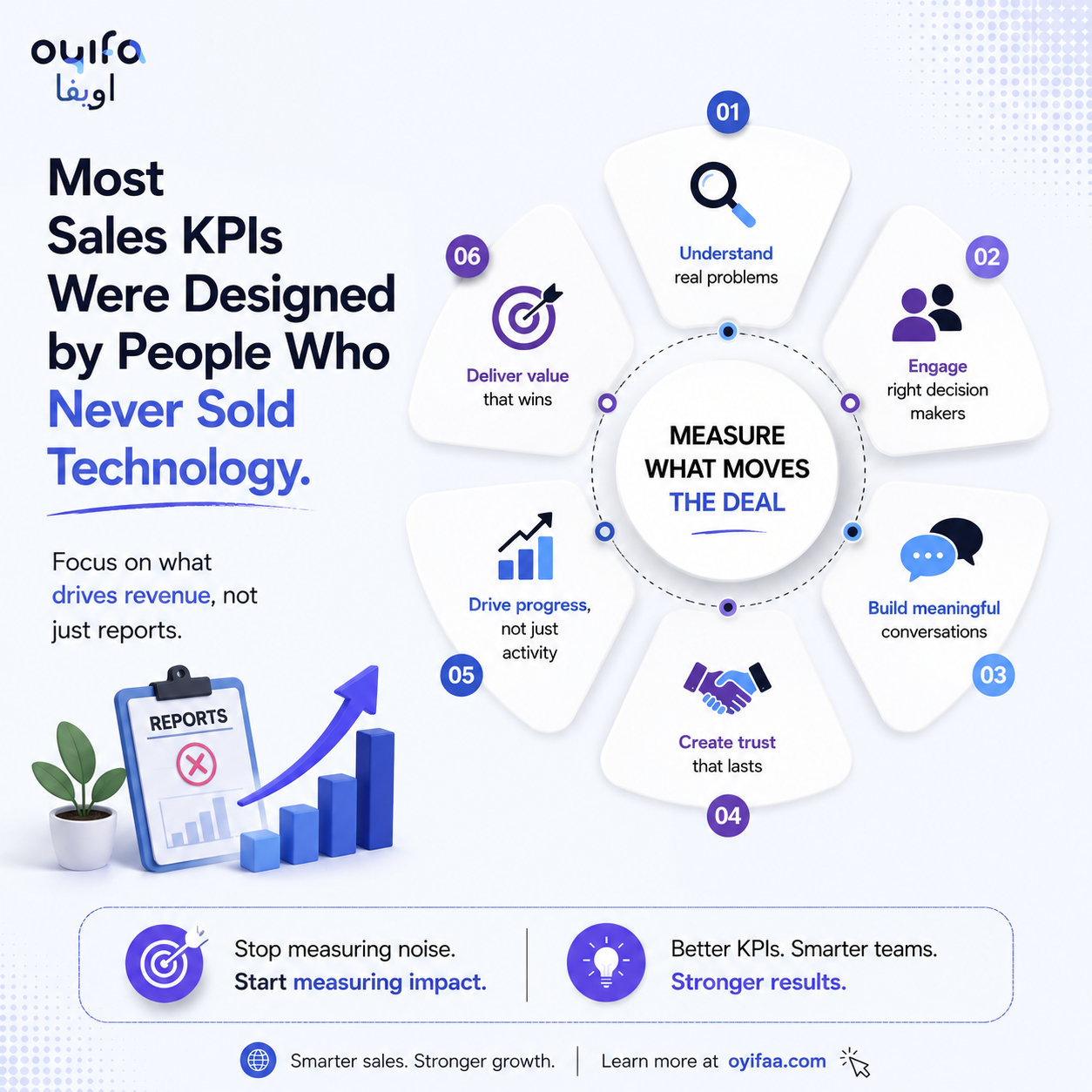
Most Sales KPIs Were Designed by People Who Never Sold Technology
Imagine sitting in a monthly sales review meeting. The dashboard lights up with impressive numbers. Thousands of calls have been made, hundreds of emails have been sent, meetings have been booked, and the CRM is full of fresh leads. Looking at those reports, everything seems to be moving in the right direction.
Then someone asks the one question that changes the mood in the room.
"If we're doing all of this, why aren't we closing more business?" 🤔
Silence usually follows.
The numbers suggest progress, but the results tell a different story. That's because many technology companies are measuring activity instead of momentum. They're rewarding sales teams for staying busy rather than helping customers move closer to a buying decision.
The uncomfortable truth is that many traditional sales KPIs were created for industries where products are simple, buying cycles are short, and decisions happen quickly. Technology doesn't work that way.
📍 Technology Sales Are a Different Game
Selling enterprise software, cloud infrastructure, cybersecurity, or digital transformation services is nothing like selling products that customers can buy after a short conversation.
A technology purchase often involves department heads, procurement teams, finance managers, technical specialists, and executive leadership. Each stakeholder has different priorities, different concerns, and different questions.
That means a salesperson spends far more time researching businesses, understanding processes, identifying risks, and building trust than simply making phone calls. Some of the most valuable work happens before the first meeting is even scheduled.
Ironically, those efforts rarely appear on a KPI dashboard.
A report can easily count 100 outbound calls. It cannot measure the quality of preparation that leads to a conversation worth having.
🍳 Imagine Judging a Chef by Kitchen Noise
Think about visiting a restaurant.
You probably wouldn't judge the chef by how loudly the kitchen sounded or how many times they stirred a pot. You judge the experience by the meal that arrives at your table, how well it's prepared, and whether you'd come back again.
Business customers think the same way.
They don't care whether a sales representative made fifty calls before speaking to them. They care whether that representative understands their business, listens carefully, and offers a solution that genuinely helps.
Being busy and being effective aren't always the same thing.
That's why activity alone has never been a reliable measure of success.
📊 When Activity Becomes the Goal
There's an old saying: "People do what they're measured on."
If an organisation rewards the number of calls, salespeople will naturally focus on making more calls.
If success is measured by emails sent, inboxes will be flooded.
If meetings booked become the target, calendars will fill up—even if those meetings lead nowhere.
Over time, the KPI stops measuring performance and starts shaping behaviour. Teams become experts at improving numbers instead of improving outcomes.
Eventually, everyone looks productive while customers continue choosing competitors who spend more time understanding their problems.
💬 Conversations Create Revenue, Not Dashboards
The most successful technology sales professionals rarely begin a meeting with a product demonstration.
Instead, they begin with curiosity.
They ask what challenges the customer is facing. They explore where processes are slowing down, what goals leadership is trying to achieve, and what obstacles are preventing growth.
Those conversations often reveal opportunities that no dashboard could ever predict.
Sometimes a single discussion with the right stakeholder creates more business value than hundreds of cold calls.
That's because customers don't remember how active you were. They remember how well you understood their situation.
🔍 Better Questions Lead to Better KPIs
Instead of asking whether the sales team completed enough activity, organisations should ask whether the activity created progress.
Did we identify a genuine business challenge?
Did we engage the right decision-maker?
Did the customer gain new insight after the meeting?
Did trust increase?
Did the opportunity move forward?
Those questions don't just produce better reports. They encourage better selling.
When sales teams know they're being evaluated on customer progress instead of activity alone, they naturally become more thoughtful in the way they prepare, communicate, and build relationships.
🤝 The Best Salespeople Don't Chase Metrics
If you speak to experienced technology sales professionals, you'll notice something interesting.
Very few of them proudly talk about how many calls they made last month.
Instead, they talk about the customer they helped solve a difficult problem. They remember the long conversations that built trust, the projects that transformed a client's business, and the relationships that continued long after the contract was signed.
Those are the moments that create sustainable growth.
Not because they're easy to count, but because they're difficult to replace.
🌱 Technology Needs Smarter Measurements
Modern buyers expect more than product knowledge.
They expect vendors who understand their industry, recognise emerging challenges, and provide thoughtful guidance before discussing solutions.
If customer expectations have evolved, then the way we measure sales performance must evolve as well.
Technology companies don't necessarily need more KPIs.
They need KPIs that reflect how modern buying decisions are actually made.
The goal shouldn't be to create busier sales teams.
The goal should be to create sales teams that consistently move customers closer to confident decisions.
✨ Final Thoughts
KPIs are incredibly important because they influence where people invest their time and energy. When businesses reward activity alone, they often create teams that look busy without creating meaningful business impact.
Technology sales have never been about making the most calls or sending the most emails. They have always been about understanding customers, earning trust, solving complex challenges, and guiding organisations toward better decisions.
The companies that consistently outperform their competitors aren't always the ones with the biggest dashboards or the highest activity reports. More often, they're the ones measuring what truly matters—customer progress, meaningful conversations, and long-term value.
Because in technology sales...
Activity fills reports.
Customer progress builds businesses. 🚀
💬 Let's Continue the Conversation
If you could remove one traditional sales KPI from every dashboard, which one would it be—and what would you measure instead?
📞 Number of Calls
📧 Emails Sent
📅 Meetings Booked
📈 Something That Better Reflects Customer Progress
Share your thoughts in the comments. We'd love to hear how you think technology sales should be measured today.
📖 Looking for more practical insights on B2B sales, procurement, and business growth? Explore more expert articles at oyifa.com and discover strategies that help sales teams create real customer value instead of simply chasing numbers